
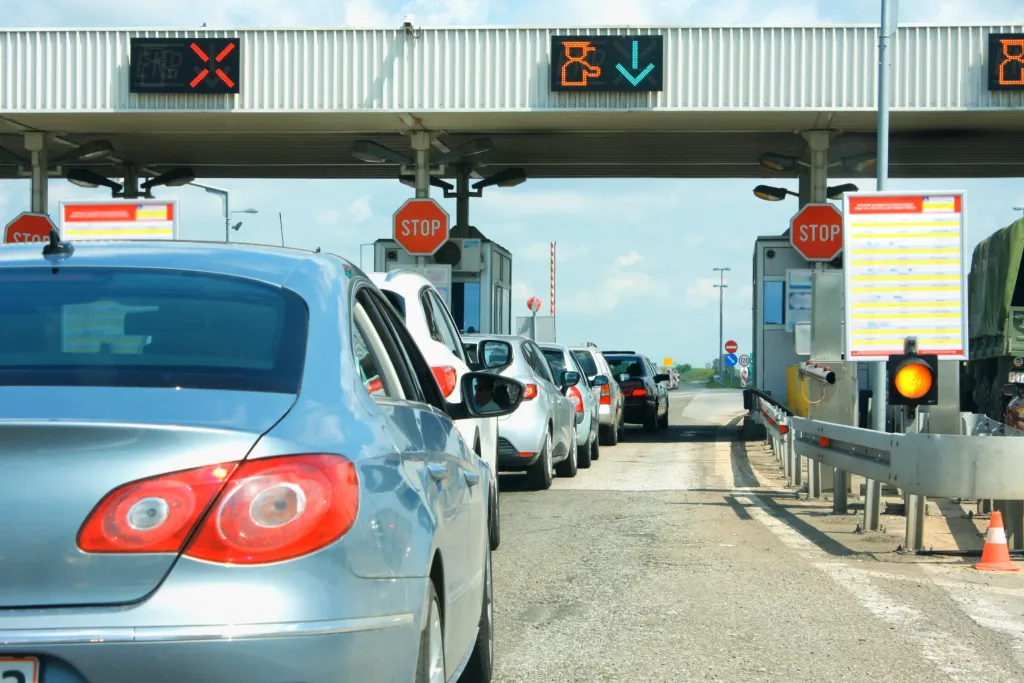
Read on in this article to find out which roads should be covered.
Owning a car comes with the advantages of moving from one geographical point to another, but also of the fast and efficient transport of goods and passengers, with a whole series of additional expenses compared to those inherent in the maintenance and operation of means of transport any category.
Thus, in addition to the taxes and fees that motor vehicle owners must pay annually to the local authorities at the place of registration, there are, especially in the context of the activity of transporting goods or people, a series of licenses that must be obtained, at a cost, from at the Romanian Road Authority, as well as the need to pay the mandatory car civil liability insurance (RCA). This set of mandatory payments to drive on public roads includes the so-called road tax, or, as it is universally known, the toll.
In this article you will find out on which roads the rovienata must be used, some useful details about it and how to obtain it when it is needed.
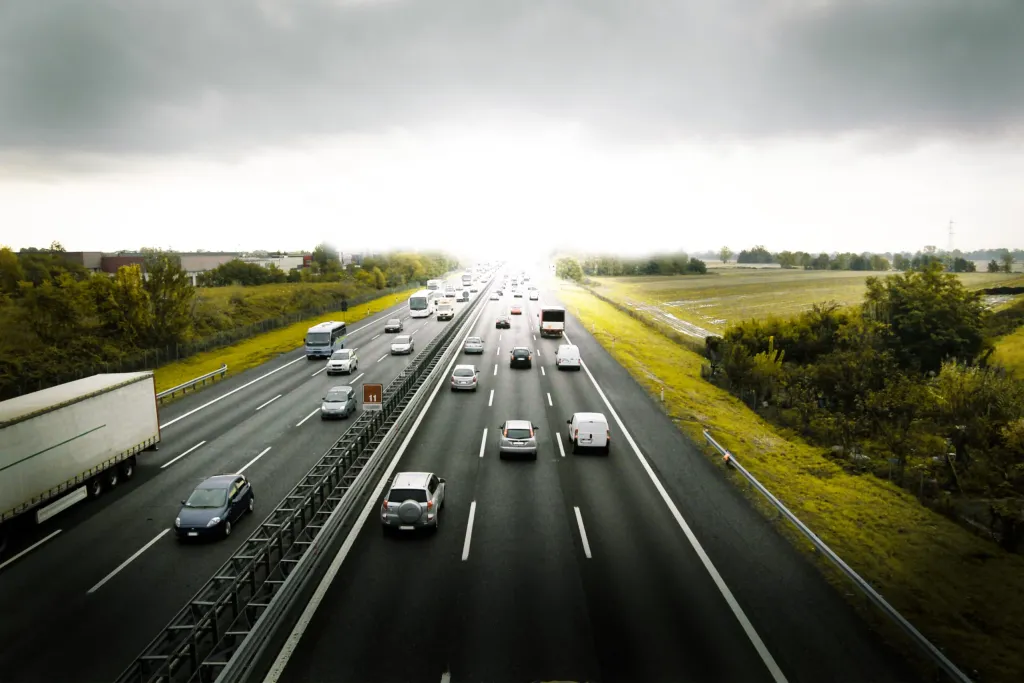
What is the rovinieta – the justification of a mandatory tax imposed on all those who drive motor vehicles on public roads
The idea of charging traffic on public roads is not a new thing in terms of taxation. Various state-organized human societies, at various stages of historical development, have resorted to this expeditious method of collecting sums of money in the easiest possible way. Thus, the fees charged for the use of commercial roads on which there was an important influx of traffic participants have been known since ancient times. Later, with the establishment of the dominance of automobiles with internal combustion engines that could travel faster and longer distances, the need for roads became acute, the network expanding in an accelerated way. Asphalt has taken the place of dirt or cobbled roads, and new roads, wider and longer, have appeared all over the world under the strong impetus given by the progressive increase in the number of motor vehicles carrying passengers or goods.
Highways and expressways are the most advanced road communication systems today, but their construction involves the expenditure of large sums of money. At the same time, road maintenance to keep the roadways at an optimal level for efficient traffic involves, in turn, continuous expenses, the higher the more branched the road network is.
Thus, the idea of introducing a mandatory tax imposed on traffic participants on a state’s national roads came somewhat naturally, and state authorities thus found a source to finance the maintenance of road networks and, of course, the rehabilitation or construction of new roads.
The road tax has acquired the name of vignette. In the case of Romania, by joining the country code (RO) with this name, the term rovinieta resulted – as a mandatory tax for the circulation of motor vehicles on Romanian roads.
In the past, the vignette involved, upon payment, issuing a sticker – or vignette – that had to be stuck on the car’s windshield in order to identify the validity period and the category of vehicle for which the payment was made. Today, it is no longer necessary to issue a vignette, the verification of the payment of the tax being carried out by means of modern video surveillance that records the registration number of the vehicles that pass through certain road sectors specially signaled in this regard.
Road tax – when must it be paid and by whom?
Rovinieta must be purchased every time a vehicle is driven outside the towns. The road legislation allows the exemption from the payment of the toll only for the roads within the inner city of the towns on the territory of the municipalities and only between the road signs that mark the entrance and exit from these territories.
All other roads that are of national interest owned by the state are subject to the scope of tolling for motor vehicle traffic. This category includes:
- highways;
- express roads;
- European national roads;
- county roads;
- secondary roads.
The verification of the payment of the toll is done with the help of fixed cameras located in various areas, and especially in the border areas.
The road tax must be paid before driving on tolled roads and is imposed equally on vehicles registered in Romania and on vehicles from other countries. Of course, the levy can be paid both by individuals and by legal entities.
An important aspect to keep in mind in the field of the application of the legislation regarding the wreckage is that which concerns the differentiation of the amount of the amount of money paid according to the category of motor vehicle.
This aspect is very important to remember, especially by contractors who own fleets of various vehicles and who must be very careful about the date of payment, the expiry dates of the scraps and especially the categories in which each vehicle in the fleet falls in order to don’t get caught on the wrong foot and avoid paying some pretty expensive fines.
It should be noted that at the present time there are tools that can significantly reduce the stress and workload required to manage large fleets both in the case of freight transport activities and in terms of car leasing and rental companies.
GPS fleet monitoring systems allow, in addition to knowing in real time, at any time, the situation and location of each vehicle and the payment of road taxes automatically, especially in the case of international freight or passenger transport.
In this way, human error, forgetting to pay the tolls when entering the roads subject to this regime is eliminated and important savings are achieved by avoiding the negative effects from a financial point of view of the fines in the field.
Returning to the categories of motor vehicles that are subject to road taxes, in Romania the payment of the road tax is imposed for:
- Category A – cars
- Category B – goods transport vehicles with MTMA (maximum authorized mass) less than or equal to 3.5 tons;
- Category C – goods transport vehicles, with the maximum authorized mass between 3.5 tons and 7.5 tons
- Category D – cargo transport vehicles with MTMA between 7.5 tons and 12 tons;
- Category E – goods transport vehicles with MTMA greater than or equal to 12 tons and having a maximum of 3 axles (inclusive);
- Category F – goods transport vehicles with MTMA greater than or equal to 12 tons and having at least 4 axles (inclusive);
- Category G – passenger transport vehicles with more than 9 seats (including the driver) and a maximum of 23 seats (including the driver);
- Category H – passenger transport vehicles with more than 23 seats (including the driver).
A series of documents are required to release the wreckage.
Individuals only need the registration certificate (car registration) or customs documents if the car has been imported and registered temporarily.
Legal entities that wish to issue the scrap sheet need the registration certificate, the identity card of the payer, the leasing contract, if the vehicle was acquired in this way, or the customs documents if it is a matter of imported and temporarily registered vehicles.
Rovinieta can be purchased for various durations of public road use. Thus, the smallest time fraction of the validity of the voucher is 7 days. The voucher can also be issued for 30 days, 90 days or 12 months. The choice of the validity period depends on the estimates made by the owners of vehicles that can move several times in a unit of time on public roads.
Thus, if it is estimated that during a year quite frequent routes will be made, it is more profitable to pay the toll over a period of 12 months. Conversely, for vehicles that rarely leave the cities – as is the case, for example, with local taxi fleets, the payment of a year’s worth of damage is not justified for all cars.
Also, the means of transport that are only in transit and that will not return to the territory of the state very often only need to pay the damage fee for a minimum period of time.
There are also some exceptions to the payment of damages. For example, vehicles used exclusively for the transport of passengers locally within the territorial radius of a locality, vehicles for the transport of students, cars with provisional registration numbers as well as the vehicles of some state institutions (the Ministries of Defense and the Interior, SRI, SIE, SPP, STS, ISU, ambulances, Red Cross, etc.) but also disabled people who drive vehicles specially adapted to them are not required to pay road taxes.
Checking road taxes in Bulgaria or in Hungary or in other European countries – how to check the vignettes and the consequences of not paying them

Rovinieta can be bought at gas stations or online. There is also the possibility of paying this tax via SMS, the amount of the road tax being inserted in the telephone subscription bill. It should be noted that payment via SMS can only be made for vehicles registered in Romania.
In Romania, checking the validity of the ticket, if you have forgotten the date of purchase or the period for which you paid the tax, can be done online on the CNAIR website. In the online verification form, you will have to enter the registration number of the vehicle but also the chassis series that you can find in the registration certificate or in the vehicle’s identity card.
It is very important to remember that the toll, as well as the vignettes that must be paid when crossing state borders to other countries, must be paid before actually driving on the road networks subject to this regime. Once paid, the validity of the vignette starts from the time at which the payment was registered.
Road tax checks should not be underestimated by drivers in any way. The fixed cameras, but also the mobile cameras that are used by the road authorities in each state are quite effective in identifying vehicles that do not have a valid vignette. At least in the case of the transport of goods and people, the fines for detection on public roads without a valid vignette are very high and can even exceed several times the value of the tax itself.
Thus, in particular, companies transporting goods or people can benefit from fleet monitoring systems that provide, as an accessory, the facility of automatic tolling in Hungary or automatic tolling in Bulgaria, or in other countries depending on the common routes on which cars travel more often.
Intelligent monitoring systems ensure that road tax payments are made from the funds that the companies owning the fleets make available to the system without drivers having to stop for this purpose. In addition, there is an accurate record of the tolls paid for each individual vehicle at all times, and thus informed decisions can be made regarding the optimization of routes and the necessary payments.
In conclusion, the toll, in the case of our country, and the other road taxes in the states that the fleets of vehicles can transit are today much easier and more efficient to manage through the automations allowed by the advances in technology. This eliminates human error, significantly saves a significant amount of work and time wasted by fleet managers with up-to-date statuses for each vehicle, and completely avoids the risk of paying fines if, by mistake, they forget payment of tolls.
